
High TB burden in Nigeria tied to poverty as govt explores community testing
High TB burden in Nigeria tied to poverty as govt explores community testing
Ahead of the 20226 World Tuberculosis Day, the Nigerian government has highlighted the persistent gaps and disease burden of TB, estimating an annual 510,000 cases of the disease, of which 61,000 are children and young adolescents between the ages of 0-14 years.
Tuberculosis has also been associated with economic deprivation, poverty, undernutrition, overcrowding, and unemployment, with the disease prevalent in low-income communities, according to medical experts.
However, as part of efforts to tackle the disease burden, the Director of Public Health at the Federal Ministry of Health and Social Welfare, Dr Charles Nzelu, said the government is advancing innovative and community-based approaches to address gaps in TB detection and treatment.
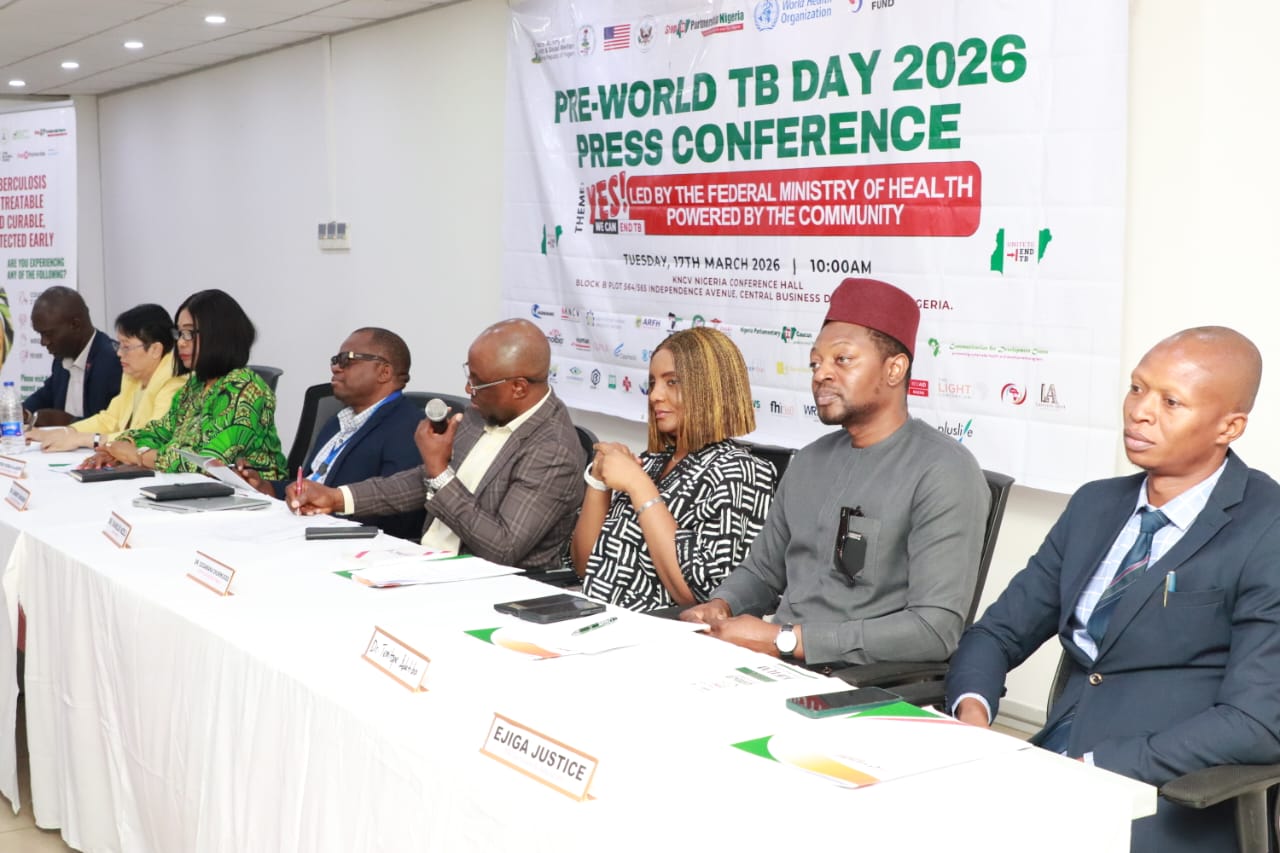
At a pre-World TB Day press conference in Abuja, Tuesday, Dr Nzelu said one of the strategies deployed is the point-of-care molecular testing platform, which brings testing closer to the people.
He said, “this new diagnostic platform allows us to bring molecular testing closer to the people and ensures that no Nigerian is left behind due to geography.”
“We have significantly increased TB case notification. However, we must be frank: the burden remains high.
He warned that technology alone is not enough, highlighting the role of community Health workers and TB survivors in tackling stigma.
Nzelu further warned Nigerians never to pay for TB services in any government hospital and called on journalists to intensify public awareness.
“No Nigerian should ever pay for TB services; diagnosis and treatment are free, and nobody should die from a disease that is curable,” he noted.
The Board Chair of the Stop TB Partnership in Nigeria, Queen Ogbuji-Ladipo, in her remarks, insisted that ending TB requires strong government leadership, with the community as the driving force for prevention, adherence, and accountability.
She called on stakeholders, the private sector, and community leaders to support the government in sustaining the momentum in the fight against TB.
“When government leads with strong policies and adequate financing, communities are empowered, ending TB becomes an achievable reality,” she stated.
In a technical presentation, the Acting National Coordinator of the National Tuberculosis, Leprosy and Buruli Ulcer Control Programme, Dr Clement Adesigbin, called attention to Drug-Resistant TB, noting it develops when patients do not complete treatment or cannot access the right medications.
He warned that Nigeria’s success in tackling the disease depends on community engagement and ending persistent infections due to drug resistance.
“Drug resistance develops when patients do not complete treatment or cannot access the right medication.
Tying this to Nigeria’s socio-economic situation, he warned, “Wherever you see poverty, malnutrition, overcrowding and joblessness, you will see Tuberculosis.”
The Executive Secretary of the Stop TB Partnership, Mayowa Joel, on his part, pointed out that collaboration between government, civil society and the private sector is critical to sustaining Nigeria’s TB response.
He described the global theme as a call to action, saying, “Ending TB is not just a global aspiration, but a realistic goal when governments take leadership and communities are actively involved.
The theme for the 2026 World TB Day in Nigeria is, ‘Yes! We can end TB: led by the Federal Ministry of Health, Powered by Communities.
tb,
Source