

Community-Led Monitoring Project Targets Improved HIV, Malaria Services in Abia
Community-Led Monitoring Project Targets Improved HIV, Malaria Services in Abia
Community-Led Monitoring Project Targets Improved HIV, Malaria Services in Abia
The Executive Secretary of the Abia State Primary Healthcare Development Agency, Dr. Kalu U. Kalu, says the Agency is doing everything possible to deliver responsive healthcare through quality digital infrastructure.
Dr. Kalu stated this in his office in Umuahia shortly after receiving the leadership of the Advocacy Team of the Victorian Clarion Foundation, N-THRIP CLM Project, Abia State, led by the Team Leader, Mrs. Loveth Onyendilefu. He noted that the Agency is leaving no stone unturned in its efforts to combat malaria, HIV/AIDS, tuberculosis, and other diseases in the state.
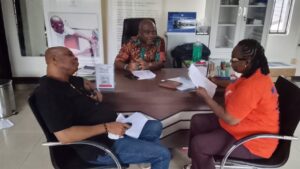
The Executive Secretary maintained that the Agency has revived a large number of equipment with the support of the State Governor, Dr. Alex Otti, and the World Bank to achieve better healthcare outcomes.

He added that the Agency is open to collaboration and assured the Foundation of its support in facilitating the community-led project.
Speaking earlier, the Advocacy Team Leader of the Victorian Clarion Foundation, N-THRIP CLM Project, Abia State, Mrs. Loveth Onyendilefu, said the Foundation is implementing a Community-Led Monitoring project across Abia South, focusing on client exit interviews, key information gathering, community outreach, and gender-based violence.
Mrs. Onyendilefu explained that the community-led monitoring findings would continue to provide real-time evidence on barriers affecting access to HIV and malaria services across all local government areas in Abia South.
She noted that one of the major challenges identified is the weak referral feedback mechanism between HIV treatment sites and appealed to the relevant agencies to strengthen linkage and retention in HIV care.
She pointed out that addressing the identified service delivery gaps would promote equity, strengthen continuity of care, reduce preventable deaths, and accelerate the state’s progress towards achieving HIV/AIDS epidemic control, as well as tuberculosis and malaria elimination targets.