
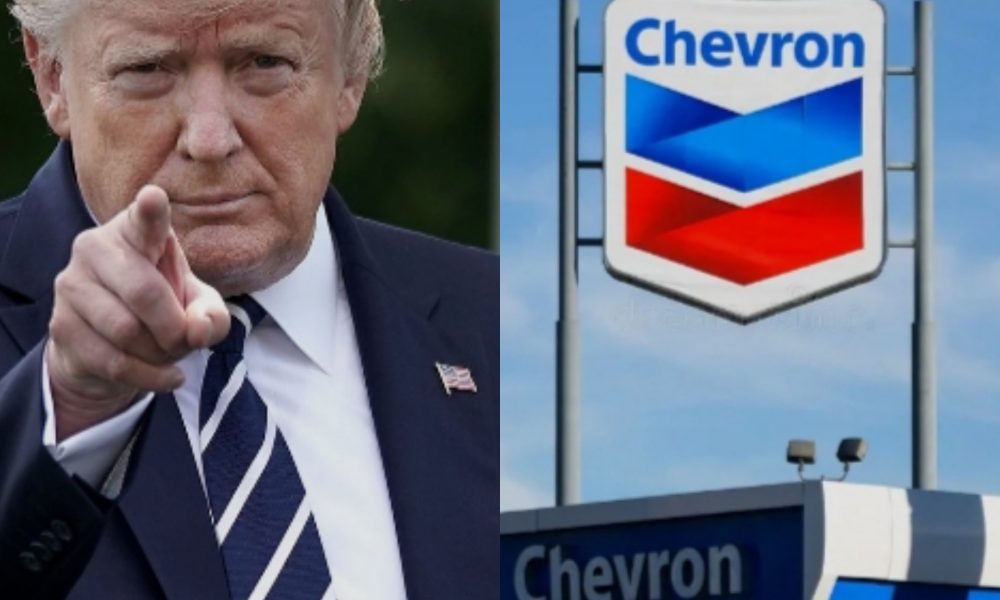
Trump Pressures Chevron and U.S. Oil Companies to Cut Gas Prices Amid Rising Profits and Election Pressure
Trump Pressures Chevron and U.S. Oil Companies to Cut Gas Prices Amid Rising Profits and Election Pressure
President Donald Trump is turning up the heat on Big Oil.
In a sharp message posted Monday on Truth Social, Trump called out Chevron CEO Mike Wirth and other top oil executives, demanding immediate relief for American drivers at the pump.
At the center of the dispute is Wirth’s recent television interview, which Trump said failed to acknowledge what his administration has done to strengthen the U.S. oil industry.
Trump pointed specifically to Chevron’s century-long footprint in Venezuela — noting the company was previously forced out but has now returned in a stronger position under his administration’s policies.
His message to the rest of the industry was even more direct:
“Get your consumer (retail!) Oil Prices DOWN, NOW!”
Chevron has not yet publicly responded.
Why Gas Prices Are Back in the Spotlight
The timing is no coincidence. With the November midterm elections approaching, rising gasoline prices and cost-of-living concerns are becoming a major political flashpoint.
For the White House, gas prices are one of the most visible economic indicators. Even a small increase at the pump hits household budgets instantly — and shapes how voters feel about the economy.
There was some relief on the global market: crude oil prices dropped sharply after Trump called off a planned major military action against Iran over the weekend.
But that drop hasn’t reached American motorists yet. Retail gas prices don’t move in lockstep with crude. They are set by a mix of factors — the price of crude, refinery margins, distribution and transportation costs, taxes, and local market conditions.
Big Oil’s Big Profits
The push to lower prices comes as America’s largest energy companies post blockbuster numbers.
ExxonMobil, Chevron, Valero Energy and Marathon Petroleum have all reported strong results, boosted by higher crude prices and refining margins since the war that began in February.
Valero just posted its strongest quarterly profit since the 2022 energy crisis that followed Russia’s invasion of Ukraine. Chevron reported its highest quarterly earnings in at least six years.
That profitability is giving the White House political leverage to argue that producers and refiners can afford to cut prices.
Still, the link between record profits and pump prices is complicated. Major oil companies operate across the entire supply chain — from drilling to refining — while what you pay at the station is heavily influenced by global markets and refining costs beyond any single company’s control.
The Balancing Act
Trump’s latest statement captures the central tension of his energy policy: championing increased U.S. oil and gas production while demanding that American consumers see the benefit in cheaper fuel.
His administration has consistently pushed for more domestic drilling and fewer restrictions on the industry. Now, it wants that production boom to translate into lower retail prices.
For drivers, the question is simple: When will falling crude prices mean cheaper gas?
For oil executives in Houston and beyond, the message from Washington is even simpler: The White House is watching — and it wants prices down now.