
You Don’t Have Current Information on JUSUN Strike – Abia Govt. Replies NBA
You Don’t Have Current Information on JUSUN Strike – Abia Govt. Replies NBA
Abia State Government says the recent communiqué issued by the State chapter of the Nigerian Bar Association Body of Chairmen regarding the ongoing strike by the Judiciary Staff Union of Nigeria JUSUN lacks basic and current information regarding the matter.
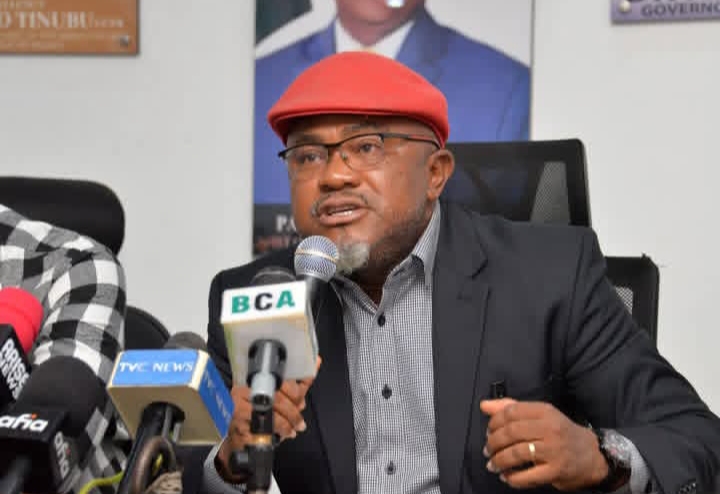
Brief Newsmen at the Government House, the Director-General of the Abia state Strategic Communication Bureau, Mr Onyebuchi Ememanka who appeared alongside the Special Adviser to the Governor on Media and Publicity, Mr Ferdinand Ekeoma described the ultimatum to the State government to resolve the lingering judiciary strike or face mass action by lawyers as unfortunate.
While pointing out that the communique was based on developments as at April 11, Mr Ememanka noted that contrary to the impression created by the NBA, the state government has maintained consistent engagement with JUSUN and has made substantial progress towards resolving the dispute.
According to him, the contentious issues as contained in the JUSUN/Government disagreement have been addressed, with the only issue of consequential adjustment remaining before a final agreement is reached.
He made it clear that the government had intentionally kept details of the negotiations out of the public domain to create an enabling environment for constructive dialogue and meaningful engagement with the union.
The DG further argued that there is substantial compliance of judicial autonomy in the state which speaks volumes of financial independence for the judicial arm of government.
“I want to say that the communiqué issued by the body of State chairmen is unfortunate and shows that they are not even up to speed with the developments that are taking place currently.
“From their communiqué, what they know is what happened as at the 11th of April. There had been regular interfaces, meetings were held, talks are ongoing and as we speak, we are almost at the point of final resolution of the issues that led to this strike
“The issue of leave allowance has been settled. The issue of their pensioners settled. The issue of financial autonomy has been clarified.
It’s just this particular issue of consequential adjustment with the government and they’re almost there”, Ememanka revealed.
Responding to the NBA’s claim that the state government ignored its request for a courtesy visit, Ememanka stated that the letter is still undergoing administrative processes, noting that NBA had also proposed a meeting with the Attorney General and Commissioner for Justice when he was out of the state on official assignment.
Mr Ememanka while also speaking on the issue of leave allowance, which initially led to the strike, said the matter has been resolved after both parties agreed that the allowance was already included in workers’ consolidated salaries, with the government agreeing to pay outstanding arrears.
He further noted that verification of retired judiciary staff was ongoing to facilitate pension payments, assuring that the exercise would remain open to accommodate all affected persons.
Mr Ememanka on judicial autonomy insisted that the state was in substantial compliance, as funds are released monthly to the judiciary as bulk allocations, which are independently managed by the state Chief Judge.

Contributing, the Special Adviser to the Governor on Media and Publicity, Mr Ferdinard Ekeoma, explained that the state government has consistently demonstrated sincerity in its efforts to resolve the impasse and expressed optimism
that the JUSUN would in due course, call off the industrial action in the interest of sustaining ongoing development across the state.
According to him, the government’s commitment to judicial welfare is evident in ongoing infrastructural investments, including the reconstruction and construction of modern court facilities across the State, noting that subvention provided to the judiciary already granted them the leverage to prioritise and execute capital projects, including procurement decisions, without undue interference and maintained that full autonomy, as often interpreted, would require structural adjustments at the federal level.