
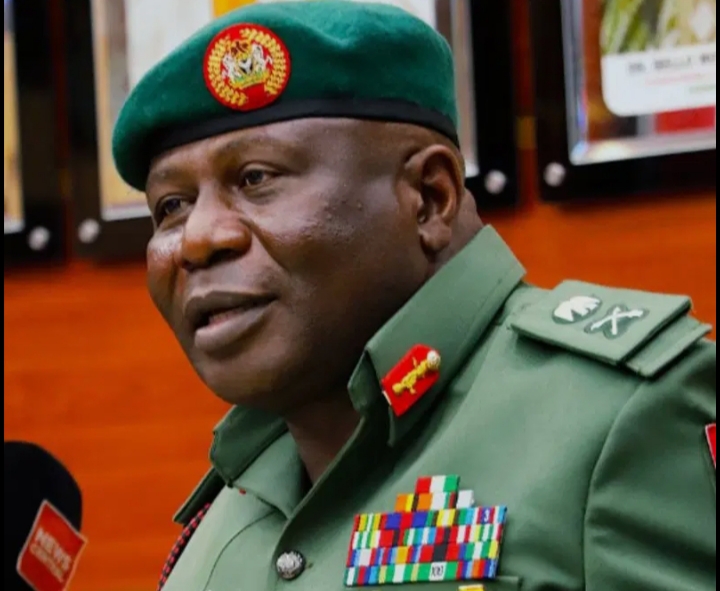
Army Chief Sounds Alarm: Sahel, Lake Chad Instability Driving Nigeria’s Security Crisis
Army Chief Sounds Alarm: Sahel, Lake Chad Instability Driving Nigeria’s Security Crisis
Nigeria’s Chief of Army Staff, Olufemi Oluyede, has identified growing instability across the Lake Chad Basin, the Sahel region and the Gulf of Guinea as major external factors worsening the country’s security challenges.
Speaking during the Nigerian Army Day Celebration 2026 in Port Harcourt, Oluyede said Nigeria’s security environment has become increasingly complex, driven not only by domestic threats but also by conflicts spilling over from neighbouring regions.
According to the Army Chief, the country continues to battle insurgency, terrorism, banditry, cybercrime, transnational organised crime and resource-related conflicts. He noted that the widespread proliferation of small arms, porous borders and the exploitation of ethnic and religious divisions have further complicated efforts to restore peace.
“Beyond Nigeria’s borders, instability within the Lake Chad Basin, the Sahel Region and along the Gulf of Guinea continues to influence and exacerbate the domestic threat environment,” Oluyede stated.
Modern Warfare Demands New Strategies
Oluyede explained that advances in technology—including artificial intelligence, cyber operations and unmanned systems—have fundamentally changed the nature of modern warfare. He stressed that the Nigerian Army must continue adapting its operational strategies to effectively counter these emerging threats.
To strengthen national security, he said the Army has intensified collaboration with other security agencies, enhanced intelligence gathering and expanded community engagement initiatives. These efforts, he noted, are complemented by investments in modern military technology and a balanced approach that combines both kinetic and non-kinetic operations to dismantle criminal networks and restore stability.
Greater Focus on Human Rights and Civilian Protection
The Army Chief also highlighted a shift towards people-centred military operations, emphasizing that civilian protection and respect for human rights remain central to the Army’s mission.
He cited the establishment of Human Rights Desks, expanded civil-military relations programmes and stricter enforcement of rules of engagement designed to minimise civilian casualties and build public confidence in military operations.
Building Capacity for Emerging Threats
Oluyede disclosed that the Nigerian Army is expanding specialised training in counter-insurgency, urban warfare and cyber defence while supporting reconstruction, humanitarian assistance and peace-building initiatives in communities affected by conflict.
He reaffirmed the Army’s commitment to professionalism, innovation and stronger collaboration with regional and international partners, expressing confidence that these partnerships will enhance Nigeria’s capacity to confront evolving security threats.
The remarks underscore the growing recognition that Nigeria’s security challenges are increasingly interconnected with regional instability, making cross-border cooperation and modern military capabilities essential components of the country’s long-term security strategy.