
FCT-IRS Launches Taxporta to Simplify Tax Compliance and Boost Revenue Collection
FCT-IRS Launches Taxporta to Simplify Tax Compliance and Boost Revenue Collection
The Federal Capital Territory Internal Revenue Service (FCT-IRS) has unveiled Taxporta, a comprehensive digital tax administration platform designed to modernise tax collection, improve voluntary compliance and align tax administration with the provisions of Nigeria’s 2025 Tax Reform Acts.
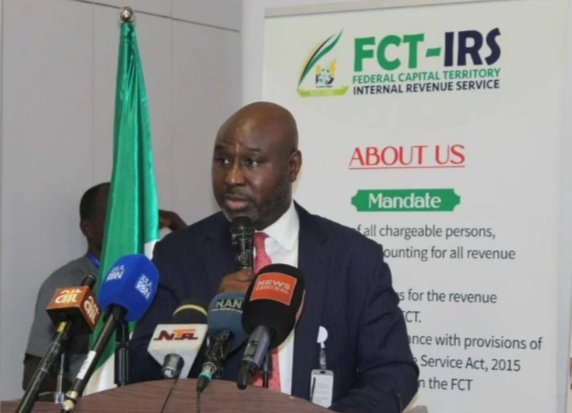
The platform was officially launched during a stakeholders’ engagement with Ministries, Departments and Agencies (MDAs) held at the National Assembly Library Trust Fund Complex in Abuja.
Speaking at the event, the Executive Chairman of FCT-IRS, Michael Ango, described the introduction of Taxporta as a major milestone in the agency’s ongoing digital transformation programme.
According to him, the platform enables taxpayers to carry out virtually every tax-related transaction online, eliminating the need for physical visits to FCT-IRS offices.
“Modern institutions must embrace technology to remain efficient and responsive. Taxporta allows taxpayers to access our services from anywhere, making tax administration faster, easier and more convenient,” he said.
A Fully Digital Tax Experience
Taxporta is a self-service platform that allows individuals, businesses and organisations to:
– Register as taxpayers.
– File tax returns online.
– Automatically calculate tax liabilities.
– Make tax payments electronically.
– Generate payment receipts instantly.
– Obtain Tax Clearance Certificates (TCCs) without visiting any tax office.
One of the platform’s key innovations is its integration with the provisions of the new tax laws. Once taxpayers enter their income information, the system automatically applies all statutory reliefs, allowances and deductions before calculating the amount payable.
According to Ango, this automation reduces human errors, improves transparency and makes tax compliance much simpler for taxpayers.
Driving Voluntary Compliance
Despite stronger enforcement measures contained in the new tax laws, the FCT-IRS says its priority remains encouraging voluntary compliance rather than imposing penalties.
Ango explained that taxpayers with genuine reasons for delayed filing would be given reasonable extensions, stressing that sanctions would only apply where there is deliberate refusal to comply with tax obligations.
He also expressed confidence that the digital platform would significantly improve internally generated revenue (IGR), noting that the agency is focused on maximising collections rather than merely achieving predetermined revenue targets.
Why Tax Revenue Matters to the FCT
The FCT-IRS chairman emphasised that tax revenue remains the backbone of infrastructure development within the Federal Capital Territory.
According to him, the FCT receives only one per cent of the Federal Government’s allocation from the Federation Account, making internally generated revenue the primary source of funding for roads, healthcare, education, public services and other development projects.
He also noted that the stakeholder engagement was organised to educate government institutions on the implementation of the 2025 tax reforms, gather feedback from stakeholders and ensure a smooth migration from the previous digital tax platform while preventing multiple taxation.
Key Provisions of the 2025 Tax Reform
During the sensitisation session, Tax Controller, MDA Tax Office, Fatima Abubakar, highlighted several important provisions of the Nigerian Tax Administration Act (NTAA) 2025 and related tax reforms.
She explained that every taxable individual, business and government institution is now required to possess a Taxpayer Identification Number (TIN). The tax authority also has the legal authority to automatically generate TINs using taxpayers’ National Identification Numbers (NINs).
Abubakar further clarified that taxable income now extends beyond basic salaries to include various employee benefits and allowances received in cash or in kind.
For instance, she noted that five per cent of the value of an official vehicle provided to an employee is considered taxable income under the new law.
She warned that failure to file complete tax returns attracts a penalty of ₦100,000 for the first month of default and ₦50,000 for each subsequent month until compliance is achieved.
In addition, Ministries, Departments and Agencies must demand valid Tax Clearance Certificates from contractors before awarding contracts. Failure to comply with this requirement could attract a ₦5 million penalty.
Stakeholders Welcome the Initiative
Executive Secretary of the National Assembly Library Trust Fund, Henry Nwauna, described the engagement as an important step towards strengthening collaboration between government institutions and tax authorities.
Similarly, a Tax Manager at Nigerian National Petroleum Company Limited, Mohammed Ali, commended the FCT-IRS for promoting transparency and building stakeholder confidence through continuous engagement.
The Director of ICT, Ayokanmi Ogunwumiju, also demonstrated the integrated payment solutions available on Taxporta, showcasing the platform’s security architecture, ease of use and seamless electronic payment process.
A Major Step Towards Digital Tax Administration
The launch of Taxporta reflects the FCT-IRS’ broader commitment to leveraging technology to improve tax administration, simplify compliance and increase internally generated revenue.
By digitising taxpayer registration, filing, payment and certification processes, the Service aims to reduce bureaucracy, improve transparency, minimise tax evasion and create a more efficient and taxpayer-friendly system.
As Nigeria continues implementing its 2025 tax reforms, Taxporta is expected to serve as a model for modern, technology-driven tax administration capable of supporting sustainable economic growth and improved public service delivery.